Water Intrusion DefenseSecuring underlayment, valleys & flashings

Architectural & Institutional Roofing · Silver Spring, MD
Roof Repair Silver Spring provides commercial tile and slate roofing assistance for properties with clay tile, concrete tile and natural slate roof systems in Silver Spring, MD. Whether your building has broken roof tiles, missing slate, recurring leaks or an aging roof that needs replacement consideration, we can help you understand the condition of the affected areas and the work involved.
Comprehensive Capabilities
Our focus is on the specific roofing problem affecting your property and the precise craftsmanship needed to address it:
Cracked, broken or displaced clay and concrete tiles can expose the protective layers beneath the roof. We address tile roof concerns involving damaged units, leaking roof sections, flashing problems and vulnerable roof transitions. The condition of nearby tiles and the underlying roof assembly should also be considered to establish whether the damage is localized.
Damaged or missing slate can create openings in the roof covering and allow moisture to reach the underlying materials. Slate repairs require suitable replacement units and attention to the existing fastening and installation arrangement. The aim is to address the affected area while preserving the surrounding roof wherever its condition allows.
When damage extends across multiple roof sections or the underlying roof assembly has deteriorated, replacement may need to be considered. The scope should account for the existing roof covering, underlayment, supporting components, flashing and the materials suitable for the building.
Diagnosing Failure Points
Tile and slate roofs can experience different types of damage depending on the material, installation, age and exposure of the building:
Impact, movement or freeze-thaw deterioration can damage individual units. Broken tiles must be assessed to determine whether the underlayment beneath them has also been affected.
Missing slate leaves the underlying roof protection exposed. The surrounding units should be checked to establish whether the problem is isolated or part of fastener failure.
Water can enter through damaged units, flashing, valleys or deteriorated underlayment. The visible interior stain may not be directly below the actual entry point.
Roof ridges and hips involve changes in direction and require properly secured components, mortar pointing, and suitable weather protection.
Chimneys, masonry walls, dormers, valleys and penetrations need correctly detailed copper or lead-coated copper flashing to keep water from entering transitions.
When moisture reaches the protective underlayment beneath tiles or slate, organic felts rot away. A surface-level repair alone will not resolve the problem.
Distinctive Architecture
Tile and slate roofs are often selected for buildings where appearance, durability and architectural character are important:
Steep roof slopes, bell towers, spires, and detailed valley transitions make roofing work specialized. Our team carefully coordinates staging to accommodate services and scheduled activities.
Existing materials have specific dimensions, quarry origins, weathering colors, and exposure widths. Repairs require compatible or specially salvaged replacement units adhering to historic preservation codes.
Schools, government complexes, and healthcare buildings require strict safety coordination for occupants and visitors, noise mitigation, and rigorous perimeter ground protection.
The roof covering defines the building's aesthetic. Repair and replacement decisions balance architectural beauty, authentic materials, and modern weatherproofing membranes.
Systematic Evaluation
When dealing with tile and slate, assessment needs to consider both the visible roof covering and the materials beneath it:
We begin by discussing the property, roof covering type, observed leaks, and repair history, including any architectural preservation guidelines.
Relevant tiles, slate slates, copper flashings, valleys, and accessible deck details are closely inspected to determine if failure is localized or widespread.
The recommended scope accounts for existing roof material, availability of compatible replacement units, and the condition of the underlying waterproofing assembly.
Before work proceeds, you receive clear specifications on proposed materials, affected roof sections, scaffolding arrangements, and warranties.
Investment Planning
Tile and slate roofing costs depend on the type of material, the extent of damage and the architectural complexity of the roof:
A damaged tile or slate does not automatically mean the whole roof needs replacing. Replacement is recommended only when:
Local Track Record
Explore our recent slate restorations and architectural clay tile repair projects across Montgomery County:
Downtown Silver Spring
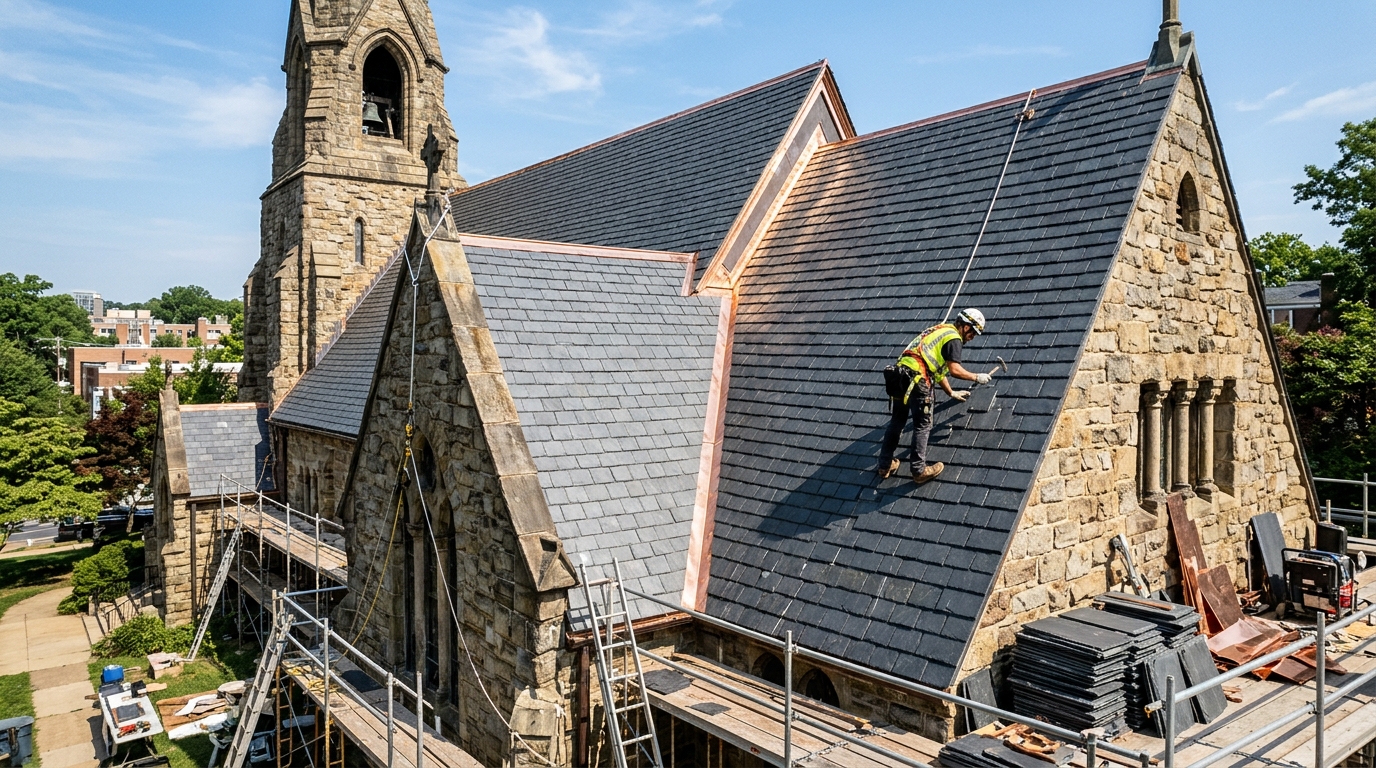
Executed precision slate repair on a steep-slope Gothic stone church. Replaced 180 broken Buckingham slates with matching thickness, replaced failing copper valley liners with 20-oz cold-rolled copper, and installed new lead-coated counterflashing along stone masonry walls.
 Colesville / Silver Spring
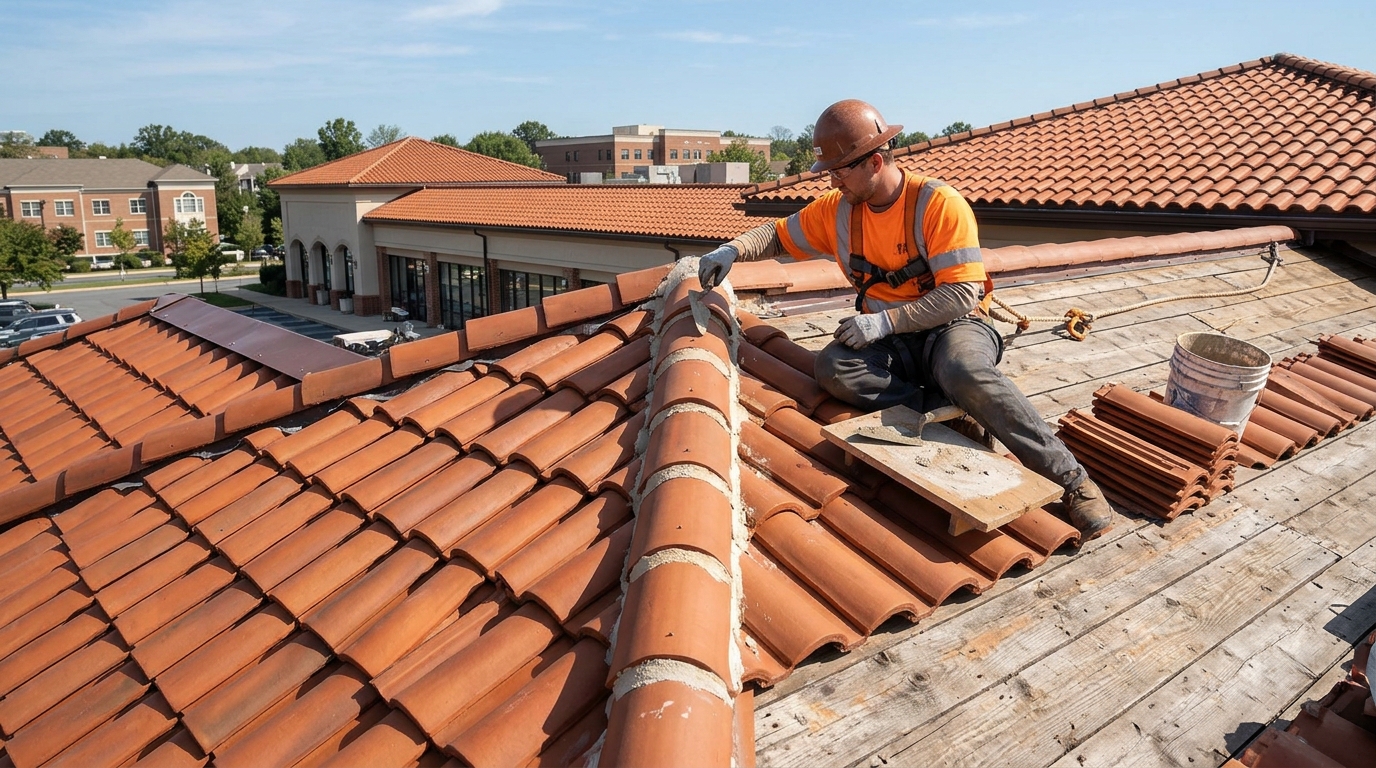
Addressed recurring leaks along the hip and ridge lines of an architectural commercial building. Carefully dismantled displaced barrel tiles, installed high-temperature self-adhering underlayment, repointed ridge caps with color-matched mortar, and refastened tiles with stainless fasteners.
Verified Institutional Feedback
“Our church was suffering from leaks along an intricate slate valley. Roof Repair Silver Spring diagnosed the rotted copper liner immediately. They matched our historic slate perfectly and installed heavy-duty copper with zero mess. Highly recommended for complex church roofing!”
“Finding a roofing contractor who truly understands Spanish clay barrel tile is rare. Roof Repair Silver Spring reset our storm-damaged tiles, rebuilt our mortar ridge caps, and fixed underlayment leaks. Truly skilled artisans who respect architectural buildings.”
“When three other roofers told us our historic office building required a 100% slate tear-off, Roof Repair Silver Spring came out and proved that only the underlayment near the dormers was compromised. They saved our organization tens of thousands of dollars through honest, targeted restoration.”
Clear Technical Answers
Common questions regarding tile and slate maintenance, leak tracing, material compatibility, and structural load:
Yes, when the damage is localized and the surrounding roof remains in suitable condition. The replacement tile needs to be compatible with the existing system, and the underlying materials should be considered.
In some cases, individual damaged or missing slate units can be replaced using slate rippers and copper bibs. The condition of the surrounding slate, fastening arrangement, underlayment and flashing helps determine whether localized repair is appropriate.
Water can enter through deteriorated underlayment, flashing, valleys or roof penetrations. The actual entry point may also be some distance from the interior water stain.
That depends on the existing material, dimensions, profile, color and availability. Older or historic buildings may require compatible or specially sourced salvaged materials to maintain the existing appearance.
Yes. The roof structure must be suitable for the weight and installation requirements of the intended roofing assembly (natural slate can weigh 800 to 1,500+ lbs per square). This is particularly important when changing from one roof covering to another.
Project planning should account for access, occupants, visitors, scheduled activities and safety requirements. Discussing these conditions before work begins helps establish a practical project plan.
Direct Architectural Consultation
If your property has broken tiles, missing slate, recurring leaks or an aging roof that needs attention, contact Roof Repair Silver Spring to discuss the condition of your roof and receive an itemized proposal.