Multi-Ply RedundancyDual layers prevent single-point failures

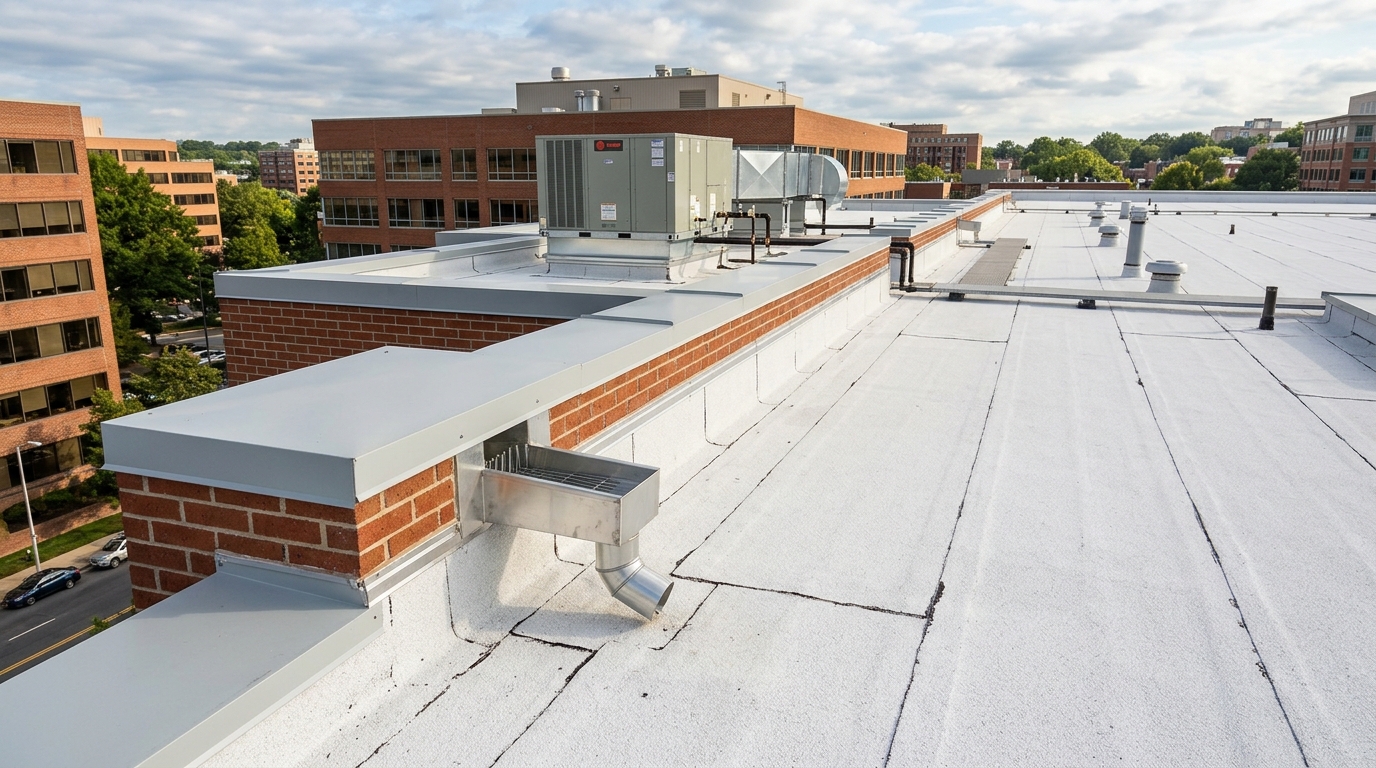
Multi-Layer Asphalt Systems · Silver Spring, MD
Many commercial buildings have asphalt-based roofing systems that have protected them for decades. When the surface starts deteriorating, seams separate, or leaks develop, you need to understand whether targeted repairs or a complete multi-layer replacement makes the most sense. Modified bitumen delivers reinforced multi-ply durability, polymer elasticity, and proven long-term performance.
Proven Multi-Layer Protection
Modified bitumen is an established solution for commercial low-slope properties across Silver Spring. Its multi-layer construction combines asphalt waterproofing with synthetic polymer elasticity.
Unlike single-ply membranes that rely on a single exposed sheet, modified bitumen incorporates a durable base ply plus a heavy-duty cap sheet. This dual-layer construction provides physical redundancy against punctures and heavy maintenance foot traffic.
Manufactured with internal fiberglass or non-woven polyester mats, modified bitumen rolls resist dimensional shrinkage, tearing, and mechanical splitting caused by structural roof expansion and contraction.
Styrene-Butadiene-Styrene (SBS) polymer modifiers give the asphalt rubber-like elasticity. The membrane remains flexible even during sub-zero Silver Spring winter freeze-thaw cycles without becoming brittle.
Products are engineered for cold-applied liquid adhesives, self-adhered peel-and-stick membranes, or traditional torch-down applications—allowing customized selection based on fire-safety parameters and roof substrate conditions.
Localized surface abrasions, mechanical cuts, or flashing shifts can be cleanly repaired with compatible asphalt mastics and reinforcing mesh without compromising the surrounding intact membrane assembly.
The thick, multi-ply asphalt bed combined with factory-embedded mineral granules withstands frequent access by HVAC technicians, window washers, and mechanical contractors.
System Application
Installing a modified bitumen roof requires meticulous execution of base layers, lap overlaps, and transition flashing details.
Evaluating steel, wood, or poured concrete decks for sound structural attachment and positive slope toward drainage points.
Securing polyisocyanurate rigid thermal panels with high-density primed cover boards engineered to handle asphalt adhesives.
Laying heavy-duty asphalt base plies mechanically fastened or bonded with cold-process adhesives to establish primary water containment.
Applying mineral-surfaced SBS cap sheets with full side-lap (3") and end-lap (6") staggering to ensure seamless moisture protection.
Employing approved torch-welding, low-odor cold-applied adhesives, or self-adhering plies adhering strictly to manufacturer fire and safety specs.
Detailing scuppers, clamping-ring drains, HVAC equipment curbs, and parapet walls with multi-ply flashing plies and metal coping caps.
Local Silver Spring Projects
View recent commercial modified bitumen installations and multi-ply replacements executed across Montgomery County.
Installed a multi-ply SBS modified bitumen system with white ceramic granule surfacing over a 14,000 sq ft office facility. Included tapered insulation panels to eliminate standing water and two-ply flashing along brick parapet coping walls.
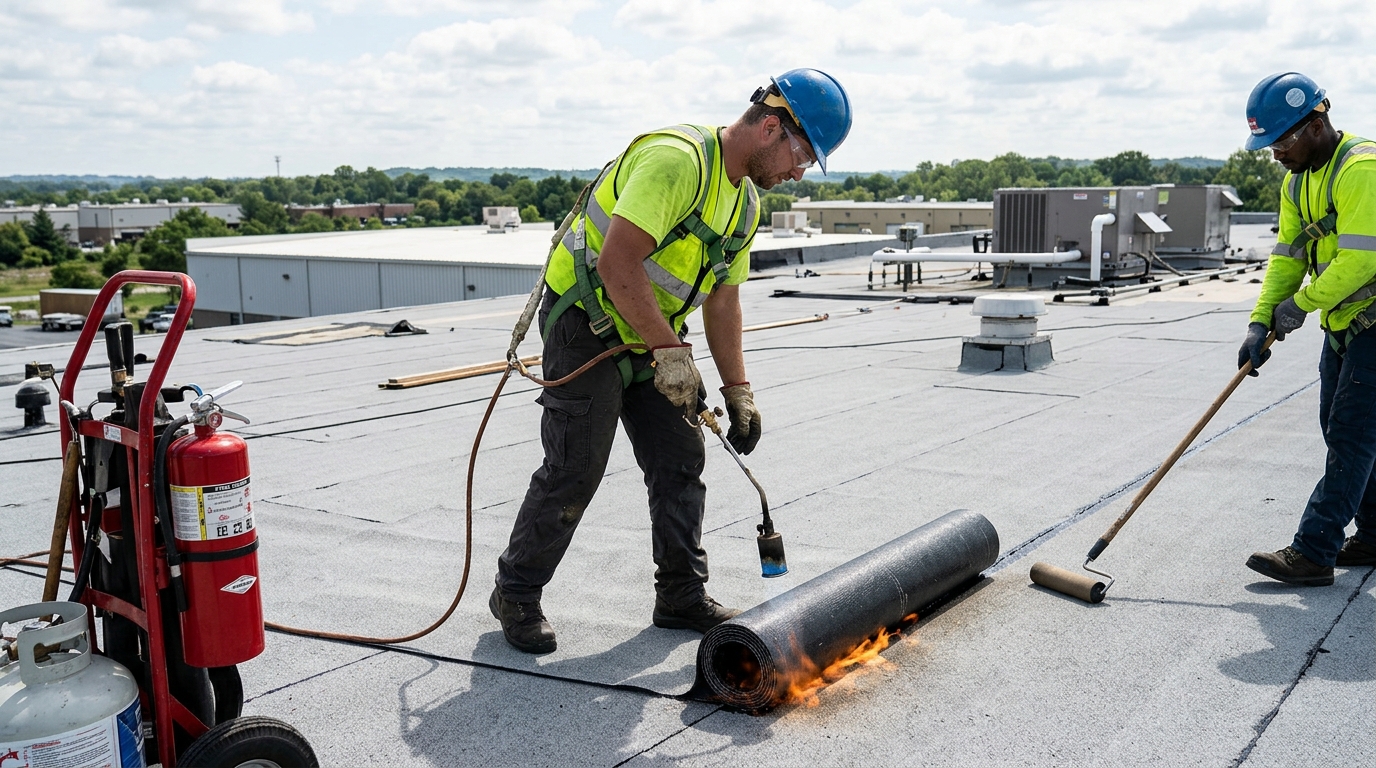
Completed full removal of water-damaged asphalt layers and installed a reinforced SBS torch-down cap sheet assembly. Work included complete chimney flashing, scupper drains, and mechanical RTU curb tie-ins with full 2-hour fire watch monitoring.
Technical Comparison
SBS and APP represent two primary polymer modifiers used in asphalt membranes. Understanding their mechanical differences helps property owners evaluate contractor proposals.
| Consideration | SBS Modified Bitumen | APP Modified Bitumen |
|---|---|---|
| Polymer Modifier | Styrene-Butadiene-Styrene (Synthetic Rubber) | Atactic Polypropylene (Plastic Polymer) |
| Material Characteristic | Greater elasticity, elongation, and cold-weather flexibility | More rigid, higher softening point, excellent heat resistance |
| Application Methods | Torch-applied, cold adhesive, hot asphalt, or self-adhered | Primarily torch-applied application |
| Selection Factor | Buildings experiencing thermal movement or freeze-thaw cycles | Buildings requiring high UV resistance and high-temperature endurance |
| Project Suitability | Ideal for Mid-Atlantic regional seasonal swings in Silver Spring | Common on steep-slope low roofs requiring plasticized flow during torching |
Application Methods
The application method determines fire-safety protocols, project timelines, and substrate compatibility.
The underside of the membrane roll is heated with a controlled propane torch wand, melting the modified asphalt bed so it forms a molten bond with the substrate. Provides exceptional seam fusion but requires strict fire-watch protocols, designated flame-free perimeters, and specialized contractor insurance.
Factory-formulated adhesive backings allow rolls to be applied directly onto primed substrates without open flames or liquid fumes. Highly favored for occupied healthcare buildings, schools, and multi-family communities where hot odor migration must be completely prevented.
Heavy SBS membranes are embedded into specialized elastomeric cold-process asphalt adhesives spread via squeegee or notched trowel. Combines multi-ply redundant strength with zero-flame safety, resulting in a flexible, self-healing commercial assembly.
Common Inquiries
Expert answers to guide your commercial asphalt membrane decisions.
Modified bitumen is an asphalt-based, multi-layer membrane reinforced with fiberglass or polyester mats, specifically engineered for commercial flat and low-slope roofs requiring heavy redundant puncture resistance.
SBS is modified with synthetic rubber for greater elasticity and cold-weather elongation. APP is modified with plastic polymers for higher heat and melt resistance during torch application.
Yes. It is an industry-standard system for commercial low-slope properties across Montgomery County, especially buildings with frequent rooftop mechanical maintenance and foot traffic.
Yes. Blisters, punctures, open laps, and deteriorated curb flashings can be permanently repaired with compatible asphalt-based mastic, reinforcement fabric, and matching mineral cap patches.
Torch-down roofing refers to applying modified bitumen by heating the asphalt backing with a propane torch until it melts and bonds to the underlying base ply. It requires trained certified technicians and fire-watch oversight.
Neither is universally superior. Self-adhered avoids open flames and odors, making it ideal for occupied facilities, while torch-applied provides rapid bonding in colder weather when self-adhered adhesives might not tack.
A multi-ply SBS modified bitumen roof typically delivers 20 to 25+ years of reliable performance when properly drained and inspected bi-annually.
A re-cover can be installed over an existing single-layer smooth or cap sheet roof if non-destructive moisture scans verify the insulation is dry and local building codes allow a second layer.
Pricing depends on total square footage, number of plies (2-ply vs. 3-ply), application method (torch vs. cold vs. self-adhered), insulation thickness, and tear-off requirements.
No. While both use asphalt waterproofing, BUR consists of multiple alternating layers of hot asphalt and felt plies topped with gravel, whereas modified bitumen uses factory-manufactured polymer-modified rolls.
Verified Commercial Feedback
"Managing a commercial property along Colesville Rd requires rapid, reliable roofing contractors who respect business operations. Roof Repair Silver Spring completed our membrane evaluation and flashing overhaul on schedule with minimal disruption to our ground-floor retail tenants."
— Marcus V., Commercial Property Manager, Silver Spring, MD
"When repeated leaks threatened our property, they clearly explained our options instead of pushing an unnecessary total replacement. Their seam repairs and curb flashing work completely solved the problem."
— Elena S., Facility Director, Downtown Silver Spring, MD
"Their commercial estimating is the most thorough I have encountered in Montgomery County. Clear line-item diagnostics, photo documentation of deck conditions, and impeccable safety standards."
— David H., HOA Board President, White Oak, MD
Direct Commercial Consultation
Connect directly with a licensed commercial roofing estimator in Silver Spring. We review property specifications, evaluate existing deck conditions, and provide transparent written proposals.